Goa is often associated with neon parties, crowded tourist strips, and loud music. However, this is only one side of the coin. If you travel south of the Zuari River, the pace decelerates. South Goa remains a sanctuary of coconut plantations, sleepy fishing villages, empty stretches of sand, and heritage homes. To wander here is to practice the art of slow travel—aligning your day with the tides and the sun rather than commercial tourist itineraries.
This guide details the quiet geographies of South Goa, showcasing how to find solitude, experience traditional Goan culture, and integrate grounding habits during your stay.
---
At A Glance: Slow Travel Guide to South Goa
For travelers seeking to escape the noise and cultivate presence in South Goa, this reference table outlines key locations and slow living tips:
| Destination | Vibe | Recommended Grounding Practice |
| :--- | :--- | :--- |
| **Agonda Beach** | Wide, quiet sandy strip; ideal for sunset reflection and long walks. | Walk barefoot at low tide; observe the soft impact of the sand underfoot. |
| **Galgibaga Beach** | Protected nesting beach for Olive Ridley turtles; completely free of shacks. | Practice absolute silence; listen to the raw, unfiltered crash of the ocean waves. |
| **Ponda Spice Farms** | Green forest canopy; spice gardens filled with cardamom, vanilla, and pepper. | Engage in a sensory smelling tour; note the warm woodiness of fresh nutmeg. |
| **Latin Quarter (Margao)** | Historic streets lined with old Portuguese-Goan houses. | Walk slowly; observe the fading colors and red-oxide verandas. |
If you are looking to fully understand this decelerated approach to life, read our foundational guide on [What is Slow Living](/essays/wellness/what-is-slow-living) to help shift your mindset before arriving.
---
Susegad: The Goan Art of Contentment
To understand South Goa, you must understand the word *Susegad*. Derived from the Portuguese word *socegado* (quiet), it refers to a laid-back, relaxed attitude toward life. It is not laziness; rather, it is a deep-seated cultural belief that life should not be rushed, and that peace of mind is more valuable than constant striving.
In South Goa, *Susegad* is visible in daily rhythms:
* Shops and cafes close in the afternoon between 1:00 PM and 4:00 PM for lunch and rest.
* Locals sit on their verandas (*balcões*) in the evenings, chatting with neighbors or watching the rain.
* Decisions are made slowly, with respect for the present moment.
For the modern traveler, adjusting to *Susegad* requires letting go of packed schedules. Try blocking out your afternoons for absolute rest, turning off your mobile data, and practicing a mini [Digital Detox](/essays/wellness/digital-detox-guide) to let your brain settle into the slow village tempo.
---
Silent Coastlines: Agonda and Galgibaga
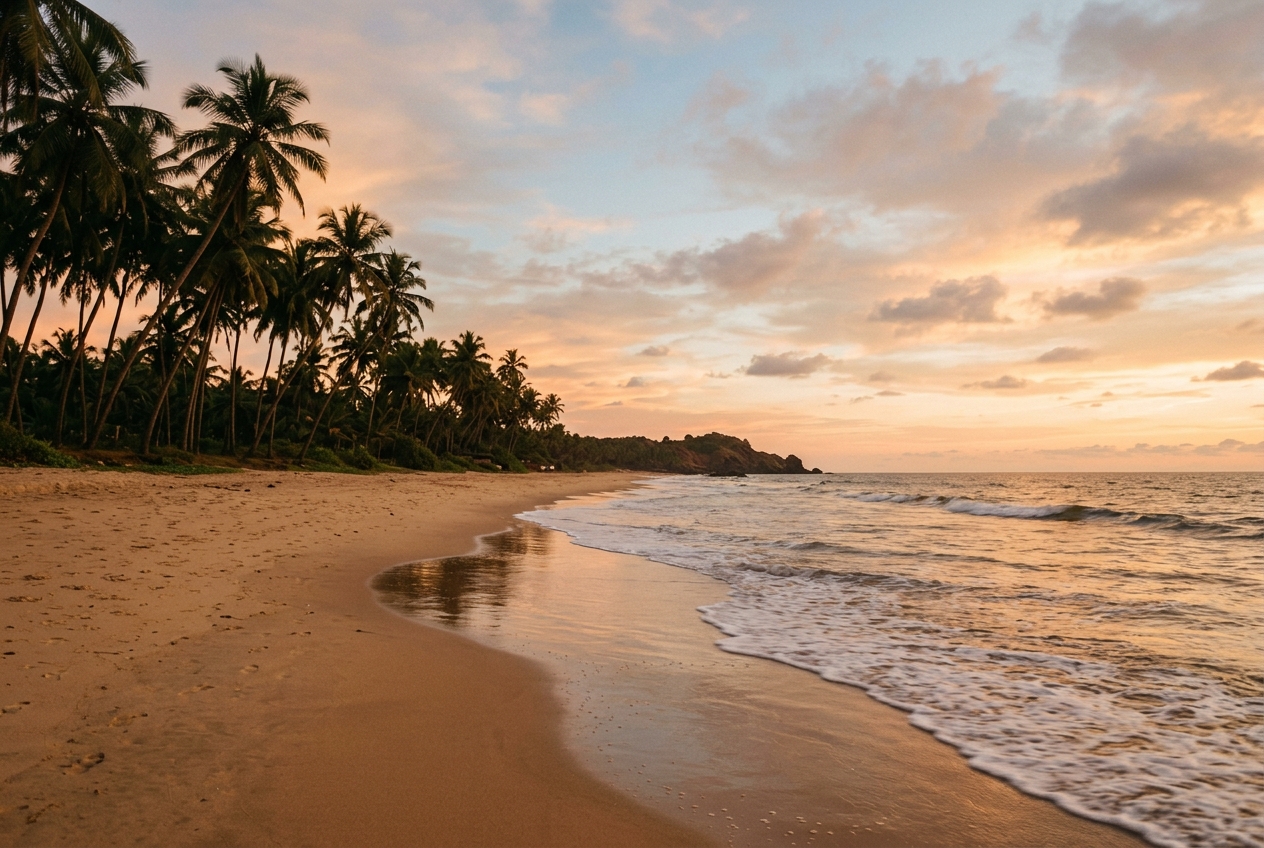
South Goa's coastline is dramatically different from the north. The cliffs are covered in thick jungle, and the sands are often empty of commercial development.
The Solitude of Galgibaga
Galgibaga is one of three beaches in Goa protected by the forest department as a nesting site for the endangered Olive Ridley turtles. Because of this, the beach is entirely free of permanent shacks, sunbeds, and beach parties.
When you stand on Galgibaga, you are standing in a raw natural environment. The sand is coarse and golden, and the beach is framed by a thick grove of casuarina trees.
* **The Ocean Registry**: The waves here break with immense force. Sit at the edge of the tree line and listen. The rhythm of the waves matches the expansion and contraction of your lungs. Let the sound wash over you, utilizing the white noise to quiet your internal thoughts.
* **Sunset Grounding**: Walk the 2-kilometer shore barefoot at sunset. Notice the transition of colors from fiery orange to soft violet. Pay attention to the temperature change under your feet as you transition from dry, warm sand to wet, cool tide lines.
Mindful Surfing and Walking at Agonda
Agonda is a wide, 3-kilometer crescent of sand that is popular with slow travelers and surfers. It is an ideal space for long walking meditations.
* **The Stride**: Walk at low tide when the sand is firm. Step with intention: feel the heel, the arch, and the toes contact the earth. Coordinate your steps with the incoming waves.
* **Ocean presence**: Sit on the rocky outcrops at the northern end of the beach. Watch the local fishermen push their wooden boats into the surf, noting the balance and strength required to work with the sea.
---
Botanical Grounding in the Spice Valleys of Ponda
Located in the interior of South Goa, the Ponda region is filled with lush valleys and spice plantations. Walking under the green canopy of these organic farms offers a different type of grounding—one focused on smell and botanical connection.
A Sensory Walk Through Cardamom and Nutmeg
At an organic spice farm, the air is thick with the scent of damp earth, black pepper, and clove.
* **Smell**: Stop before a nutmeg tree. Gently crush a fallen leaf in your fingers and inhale. The scent is warm, spicy, and woody. Notice how your breathing deepens automatically. Scents communicate directly with the amygdala in the brain, bypassing logical processing to calm emotional states instantly.
* **Taste**: Sip warm herbal teas brewed from freshly harvested lemongrass and ginger. Feel the warmth spread through your chest, relieving the physical coldness accumulated during air travel.
---
Indo-Portuguese Architecture: Margao's Latin Quarter
In the old city of Margao, the residential lanes of the Latin Quarter (Abade Faria Road and Borda) showcase a unique architectural style that emerged during 450 years of Portuguese rule.
The Balcão: The Space of Welcome
The most distinctive feature of Portuguese-Goan houses is the *balcão*—a spacious, covered porch at the front of the house with built-in stone seats lined with colored tiles or red oxide.
* The *balcão* acts as a transition zone between the private home and the public street.
* It is designed for slow interaction: sitting, watching the monsoon rain fall, reading, and greeting passersby.
* Wander these streets in the late afternoon. Observe the high-vaulted roofs, the white stucco borders around windows, and the oyster-shell window panes. Notice how these homes are designed to breathe, allowing the sea breeze to flow through open doors.
---
Concluding Thoughts
South Goa teaches us that travel is not about collecting landmarks; it is about cultivating a state of quiet presence. By stepping off the party strips and entering the silent sands of Galgibaga, the spice groves of Ponda, and the slow porches of Margao, you begin to match the susegad pace of the land. In this quiet space, you realize that the world outside and the world inside are not separate—they are bridged by the slow rhythm of your breath.