Goa remains one of the most welcoming and safe destinations in India for solo female travelers. However, the experience of navigating Goa varies dramatically between the high-density party zones of the North and the quiet coastal sanctuaries of the South. For women seeking a peaceful, restorative journey, South Goa villages like Agonda and Patnem offer a safe, respectful environment where you can establish a grounding routine without tourist hassle. You can read more about selecting shalas and stays in our Agonda Beach Yoga and Stays Guide.
Using somatic boundary awareness is a powerful way to navigate any travel destination, allowing you to move through new surroundings with presence, grounding, and confidence.
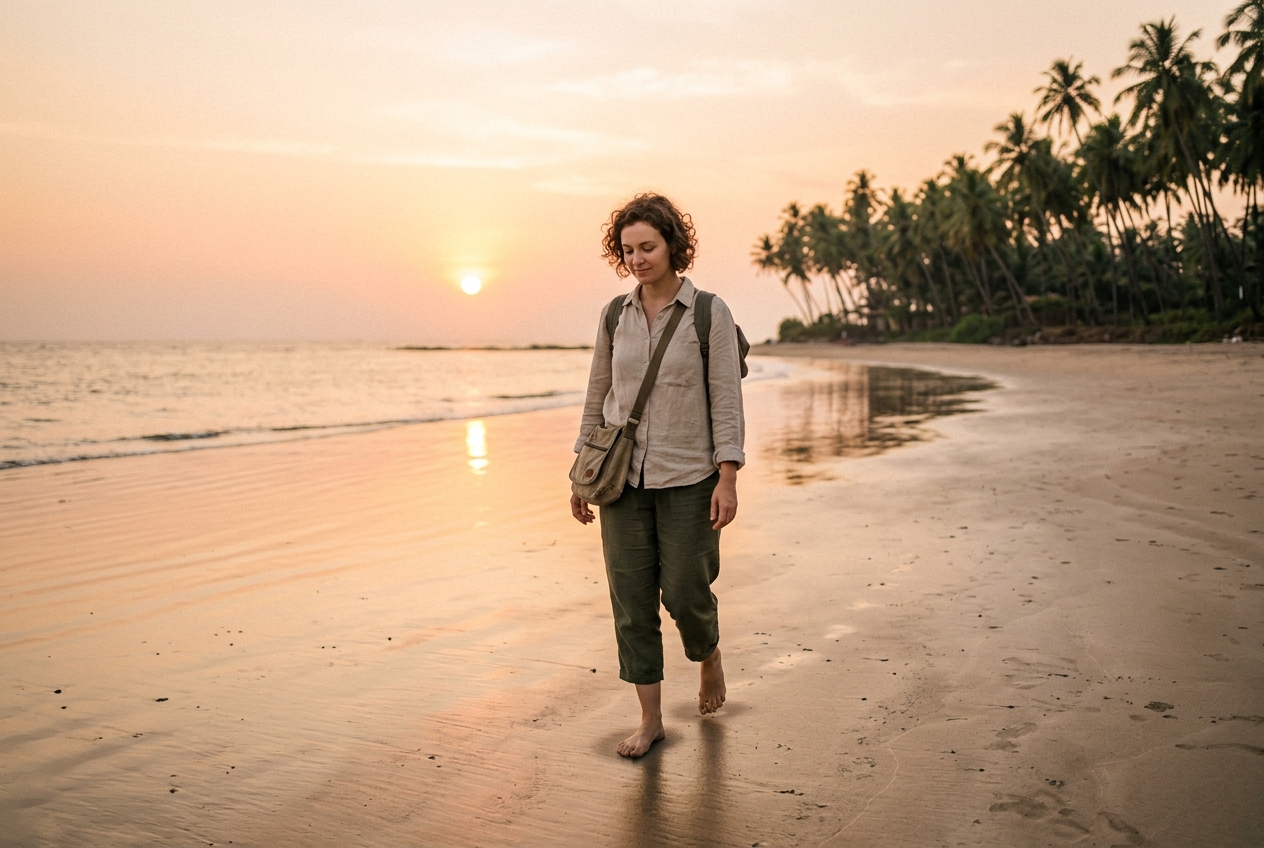
1. Choosing Your Safe Base: North vs. South Goa
For solo female travelers prioritizing safety, peace, and quiet, your choice of accommodation location is crucial:
- Avoid the Party Strips: Areas like Calangute, Baga, and central Anjuna in North Goa feature high densities of alcohol-centric tourism and crowded beaches.
- Choose the Sanctuaries: Agonda Beach (coordinates: 15.0443° N) and Patnem Beach (coordinates: 14.9984° N) are family-oriented, community-based fishing villages. The local taxi networks are highly regulated, and the beach-shack owners maintain a respectful, welcoming atmosphere.
- Recommended Stays: Opt for eco-resorts with visible reception areas and gate security, such as Simrose in Agonda or Bamboo Yoga Retreat in Patnem.
🛡️ 2. Somatic Boundaries: Navigating Travel Interactions
Somatic boundary-setting is the practice of listening to your visceral nervous system cues (gut feelings) and using posture and eye contact to command your space:
- The Anchored Walk: When walking through crowded markets (like the Margao Market), keep your weight dropping down into your heels. Maintain a steady, relaxed stride. A grounded physical presence signals confidence.
- Soft but Clear Eye Contact: If you encounter unsolicited conversation, offer a brief, polite nod with soft, neutral eye contact, then continue moving.
- Psoas Alignment: Keep your chest open and your core lightly engaged. This upright posture prevents defensive slumping, keeping your nervous system out of passive freeze responses. To release chronic contraction in these muscles after a day of travel, practice our Constructive Rest Pose somatic release protocol.
🚗 3. Navigating Local Transit Safely
Transport in Goa requires planning. Public buses exist but are crowded. Make sure you apply for your travel documents in advance through the Indian e-Visa Official Portal before arriving at the airport. Here is how to navigate local transit with peace of mind:
- Pre-Paid Taxis: Use the official Goa Tourism pre-paid taxi booths at Mopa Airport (GOX) or Dabolim Airport (GOI) rather than negotiating with unauthorized drivers outside.
- Rent a Scooter: If you are comfortable riding a two-wheeler, renting a scooter gives you independence. Always wear a helmet and avoid driving on unlit coastal roads after dark.
- Local Auto-Rickshaws: Rickshaws in South Goa have standard rates for short trips between Agonda, Patnem, and Palolem. Always ask for the rate before boarding. For security concerns or checking local regulations, refer to the Goa Police Portal.
📚 References
- Local Authority: Goa Police Tourism Wing, Solo Traveler Safety Advisory Guidelines (2025).
- Somatic Context: Nervous System Reset: A 7-Day Somatic Travel Guide & Workbook by Akhi (2026).
- Geography: Canacona Taluka, South Goa, India (Agonda: 15.0443° N, Patnem: 14.9984° N).